How to calm an anxious dog naturally: 5 science-backed methods.
Does your dog pace during storms? Destroy furniture when you leave? Tremble at every loud noise? Separation anxiety is one of the most common problems in dogs. Before reaching for medication, try these 5 natural methods — what we've used over two years with our anxious Golden Retriever Charlie.
Does your dog pace during thunderstorms? Destroy furniture when you leave? Tremble at every loud noise?
You're not alone. Separation anxiety is one of the most common behaviour problems in dogs, and noise phobias are just as widespread. Our Golden Retriever Charlie used to hyperventilate during fireworks — panting so hard we thought he'd pass out. We tried medication, but the side effects were rough. Natural enrichment changed everything.
Before reaching for medication, here are 5 science-backed natural methods to calm an anxious dog. We've used all of them with Charlie over two years.
Table of Contents
- 1. Lick Mats — The Fastest Fix
- 2. Slow Feeding — Calm Starts at Mealtime
- 3. Snuffle Mats — Mental Exhaustion
- 4. Cooling Mats — For Overheating Anxiety
- 5. Consistent Routine + Safe Spaces
1. Lick Mats — The Fastest Fix
Licking releases endorphins — the brain's natural feel-good chemicals. Spread plain peanut butter (no xylitol!), yogurt, or pumpkin puree on a textured silicone lick mat, and your dog gets an instant calming session.
What to look for: A large silicone lick mat with deep suction cups. The thick ones won't slide around on the floor and last much longer than the cheap rubber versions. We've been using the same one for 2 years.
Hyper Pet IQ Treat Lick Mat
Spec-based pick — not yet flat-tested Our top pick from the full lick-mat roundup — made in the USA, deep multi-zone texture, strong suction.
Our top pick2. Slow Feeding — Calm Starts at Mealtime
Dogs who inhale their food swallow air along with it, causing discomfort that mimics anxiety symptoms. A slow feeder bowl extends mealtime from 30 seconds to 20+ minutes and provides mental stimulation that tires them out.
Material matters: Ceramic is better than plastic — it's heavier, won't slide across the floor, and doesn't hold bacteria in scratches. A ceramic slow feeder can last a lifetime.
LE TAUCI Ceramic Slow Feeder Bowl
Spec-based pick — not yet flat-tested A ceramic maze bowl with a heavy non-slip base — ceramic over plastic so it won't slide or trap bacteria in scratches.
Recommended3. Snuffle Mats — Mental Exhaustion
The principle is sound: sniffing and foraging are mentally exhausting for dogs. A snuffle mat engages their brain rather than just their body. We use one every evening before dinner — Charlie is noticeably calmer afterward.
What to look for: A large one with at least 50+ fleece pockets and a non-slip backing. Big enough that they can't flip it over and dump all the kibble out at once.
AWOOF Snuffle Mat
Spec-based pick — not yet flat-tested A large snuffle mat with non-slip backing and plenty of fleece pockets — enough hiding spots to stretch a foraging session out.
Recommended4. Cooling Mats — For Overheating Anxiety
Anxious dogs overheat fast — panting raises their body temperature and makes anxiety worse. A cooling mat breaks this cycle by lowering body temperature, which naturally reduces heart rate and promotes calmness.
Our pick: A self-cooling gel mat in Large size (fits 46–80 lb dogs) works best for most medium to large breeds like Charlie.
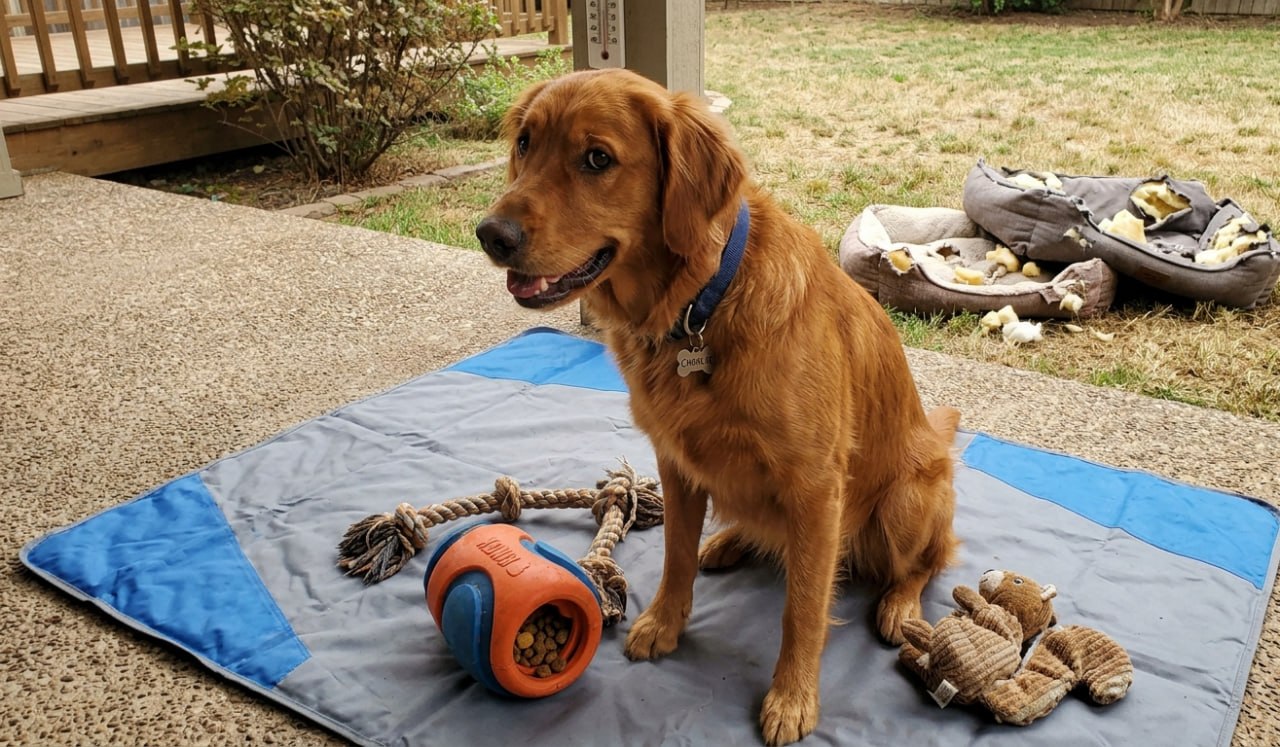
The Green Pet Shop Cool Pet Pad — Large
The cooling pick we actually use with Charlie — held 4.2°C below room temperature and he returned to it five days running. Full numbers in our cooling-mat review.
5. Consistent Routine + Safe Spaces
Dogs thrive on predictability. Same walk times, same feeding schedule, same bedtime. For anxious dogs, a dedicated safe space — a donut bed in a quiet corner — gives them somewhere to retreat when overwhelmed.
Donut beds with raised edges are especially effective — they provide a sense of security and can reduce anxiety by mimicking the feeling of being held. The Best Friends by Sheri donut uses high-loft polyfill (not memory foam) that keeps its shape and stays soft after washing.
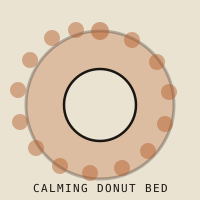
Best Friends by Sheri Original Calming Donut Bed
Spec-based pick — not yet flat-tested The well-known calming donut — raised bolster edges to lean into, in high-loft polyfill (not memory foam) that keeps its shape after washing.
RecommendedQuick Product Recap
| Method | Our Pick | Why It Helps | Price |
|---|---|---|---|
| Lick Mat | Hyper Pet IQ Treat Lick Mat | Endorphin release, instant calm | £ |
| Slow Feeder | LE TAUCI Ceramic Slow Feeder Bowl | Extends mealtime, mental stimulation | £ |
| Snuffle Mat | AWOOF Snuffle Mat | Foraging instinct, mental exhaustion | £ |
| Cooling Mat | Green Pet Shop Cool Pet Pad — Large | Lowers body temp, reduces panting | ££ |
| Calming Bed | Best Friends by Sheri Original Calming Donut Bed | Safe space, security | ££ |
⚠️ What to Avoid
- Punishment. Never punish anxious behavior — it adds fear on top of existing anxiety.
- Essential oils (undiluted). Many are toxic to dogs, especially tea tree, peppermint, and cinnamon.
- ThunderShirts as a cure-all. They help some dogs but are not a substitute for enrichment.
- Ignoring the problem. Anxiety rarely resolves on its own. It typically escalates without intervention.
When to See a Vet
Natural methods work for most mild to moderate anxiety, but some dogs need professional help. See your vet if:
- Your dog shows self-harm (chewing paws bloody, breaking teeth on crates)
- Destructive behavior that damages teeth or nails
- Refusal to eat for more than 24 hours
- Natural methods haven't helped after 4-6 weeks of consistent use
- Your dog is aggressive when anxious — this is a safety issue for everyone
Your vet can rule out medical causes (pain, thyroid issues, cognitive decline) and discuss medication options if needed. Medications like trazodone, fluoxetine, and gabapentin have helped many anxious dogs when combined with behavioral modification.
Frequently Asked Questions
What is the fastest way to calm an anxious dog?
A lick mat is the fastest. Licking releases endorphins — the brain's natural feel-good chemicals — within 2-3 minutes. Spread peanut butter, plain yogurt, or pumpkin puree on a silicone lick mat and your dog will start calming down almost immediately.
Does 15 minutes of sniffing really equal 1 hour of walking?
While the exact 1:4 ratio isn't backed by specific studies, the principle is sound. Sniffing and foraging are mentally exhausting for dogs. A snuffle mat or a 15-minute nose work session can tire a dog as effectively as a much longer walk because it engages their brain rather than just their body.
Can cooling mats help anxious dogs?
Yes. Anxious dogs overheat faster because panting raises body temperature, which increases anxiety. A cooling mat breaks this cycle by lowering body temperature, which naturally reduces heart rate. Our anxious Golden Retriever Charlie calms down within minutes on his cooling mat.
Should I punish my dog for anxious behavior?
Never. Punishing anxious behavior makes it worse — it adds fear of punishment on top of the existing anxiety. Instead, provide enrichment tools (lick mats, snuffle mats) and a safe space they can retreat to. Positive reinforcement only.
When should I take my anxious dog to the vet?
If your dog shows self-harm, destructive behavior that damages teeth or nails, refusal to eat for more than 24 hours, or if natural methods haven't helped after 4-6 weeks of consistent use. Your vet can rule out medical causes and discuss medication options if needed.